Flash USDT, A New Method Using ChainIDE and MetaMask
· based on the channel Rca FastPrint
Flash USDT is a method for creating and interacting with USDT-like tokens instantly on the Ethereum blockchain using smart contract technology. This approach leverages the ChainIDE platform for development and testing, combined with MetaMask for wallet management and transaction signing. The method centers on deploying an ERC20-compliant smart contract that mimics USDT token behavior, enabling users to simulate token creation and transfers.
Understanding Flash USDT and Its Purpose
Flash USDT refers to a technique of generating USDT tokens quickly on the blockchain, primarily for educational, testing, or development purposes rather than real value transfer. The tokens created are ERC20-compatible, allowing interaction with wallets like MetaMask and Ethereum-based decentralized applications (dApps). This method is useful for developers who want to understand token mechanics or test smart contract functionalities without relying on actual USDT tokens.
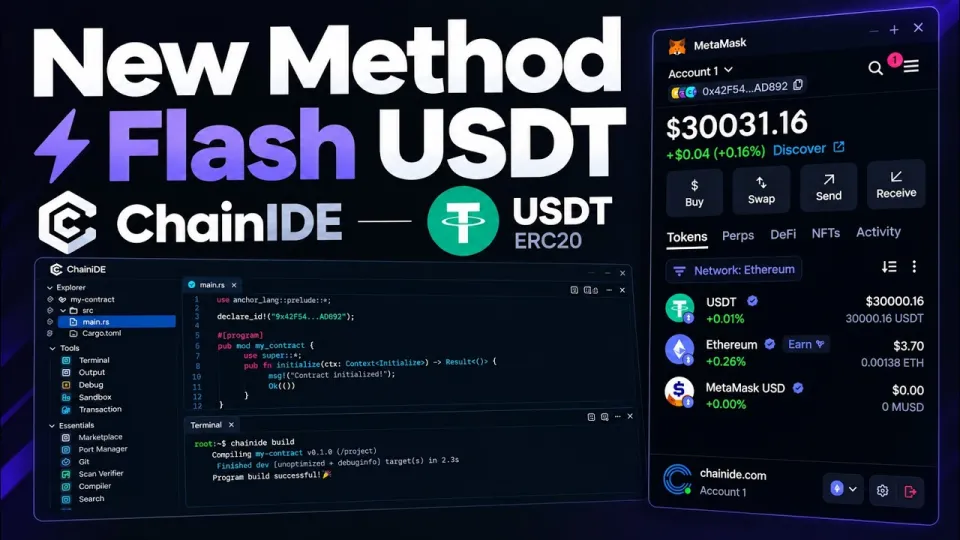
Video: Flash USDT | Found a NEW Method on ChainIDE
Setting Up ChainIDE for Flash USDT Development
ChainIDE (https://chainide.com/) is a web-based integrated development environment tailored for blockchain smart contract programming. To create Flash USDT, developers start by accessing ChainIDE, which offers tools for writing, compiling, and deploying Solidity smart contracts.
Steps to set up ChainIDE:
- Register or log in on ChainIDE.
- Create a new project and select the Ethereum environment.
- Write or import the ERC20 token smart contract code configured to simulate USDT.
- Compile the contract and resolve any errors.
- Deploy the contract on a test network to avoid risks.
This environment streamlines the development process by integrating editing and blockchain interaction in one place.
ERC20 Token Structure and Flash USDT
The Flash USDT token is based on the ERC20 standard, a widely adopted Ethereum token protocol. The key components include:
- Total Supply: Defines the maximum number of tokens.
- Balance Mapping: Tracks token balances per address.
- Transfer Functions: Enable token sending between addresses.
- Approval and Allowance: Manage delegated transfers.
By implementing these components, the Flash USDT contract can simulate the behavior of genuine USDT tokens, including balance queries and transfer events. Understanding each part is crucial to modifying or auditing the token logic.
Integrating MetaMask with Flash USDT
MetaMask is a popular Ethereum wallet extension that connects the user’s browser to Ethereum networks. It allows users to manage private keys, sign transactions, and interact with smart contracts directly.
To work with Flash USDT:
- Install MetaMask and create or import a wallet.
- Connect MetaMask to the appropriate Ethereum test network where the Flash USDT contract is deployed.
- Use ChainIDE or a contract interface to call contract functions such as minting or transferring tokens.
- Confirm transactions in MetaMask, which handles gas fees and signing.
This seamless integration enables real-time testing and interaction with Flash USDT tokens.
Testing, Verification, and Common Mistakes
Testing the Flash USDT contract on testnets is critical before any live deployment. Developers should:
- Verify the contract source code matches the deployed bytecode.
- Check for common vulnerabilities like reentrancy or integer overflow.
- Ensure transaction parameters (gas limits, addresses) are correct.
- Avoid sending real funds to contracts without thorough review.
Common mistakes include forgetting to set the correct network in MetaMask, deploying incomplete contracts, or skipping contract verification steps.
Useful Links
- ChainIDE platform for blockchain development: https://chainide.com/
- ChainIDE Script for Flash USDT creation: https://sites.google.com/view/defiflashusdt
Итог
Flash USDT offers a practical approach to creating and testing USDT-like tokens using ChainIDE and MetaMask. This method is ideal for developers learning smart contract deployment, token standards, and wallet integration. The detailed walkthrough of ERC20 structure, ChainIDE setup, and MetaMask interaction provides a solid foundation for safe and effective experimentation. Always prioritize security and contract verification when dealing with blockchain assets. For more comprehensive tutorials and updates, refer to the channel Rca FastPrint and visit ChainIDE to start your development journey.
Key takeaways
- Flash USDT creation involves smart contracts on Ethereum using ERC20 standards.
- ChainIDE provides an integrated development environment for deploying and testing Flash USDT.
- MetaMask wallet is used for connecting to the Ethereum network and interacting with contracts.
- Understanding ERC20 token structure is essential for creating Flash USDT tokens.
- Always verify contracts and avoid sending real funds to unverified sources.
Source: Flash USDT | Found a NEW Method on ChainIDE · Markdown version
Questions & answers
What is Flash USDT?
Flash USDT is a method to quickly create USDT-like tokens on the Ethereum blockchain, primarily for development and testing purposes using smart contracts.
How does ChainIDE help in creating Flash USDT?
ChainIDE provides an integrated development environment for writing, compiling, and deploying smart contracts, making it easier to develop and test Flash USDT tokens.
Can I use Flash USDT tokens in my MetaMask wallet?
Yes, Flash USDT tokens are ERC20-compliant and can be added to MetaMask for balance tracking and transactions on compatible Ethereum test networks.
Is it safe to send real funds when testing Flash USDT?
No, you should never send real funds to unverified contracts or during testing. Always use test networks and verify contract source code before any transactions.